
Source: www.MNNonline.org
Date: July 20, 2026
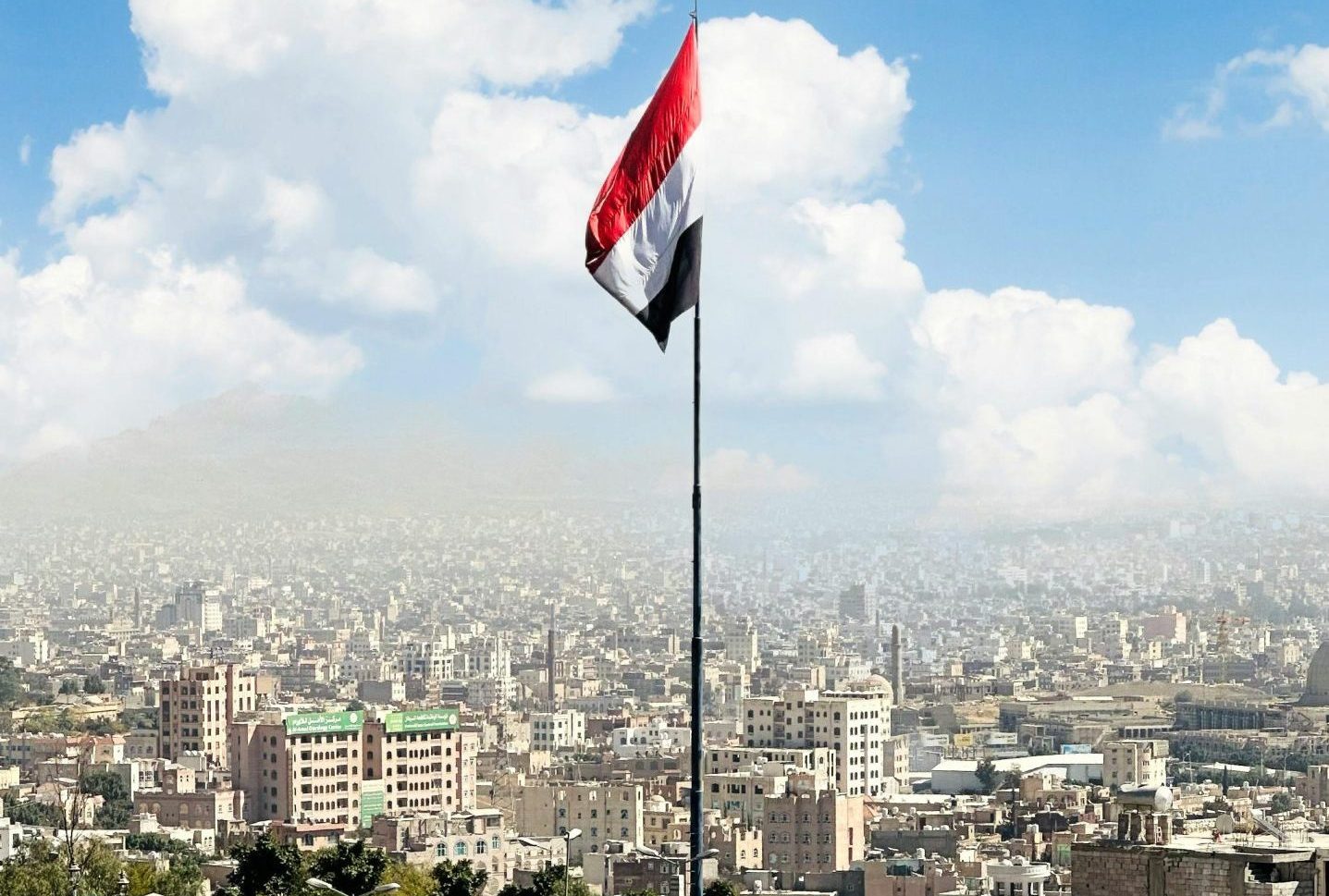
Yemen (MNN) — The Yemen-based political and militant group known as the Houthis fired missiles at Saudi Arabia July 13, breaking a four-year, informal truce.
The Houthis accused Saudi Arabia of bombing Sanaa airport, which is under Houthi control. Yemen’s exiled and largely powerless government claimed the Sanaa attack, but the Houthis have continued to specify Saudi Arabia in their public messages. (More on why below.)
Concerns remain about the Iran-backed group resuming attacks on the Red Sea shipping route, as an extension of the United States-Iran war. The Houthis (also known as Ansarallah) were redesignated by the US in 2025 as a Foreign Terrorist Organization.
Trey Hulsey is a consultant who works with nonprofits and NGOs in the Middle East. He says that although it’s hard to predict what will happen, it’s in the Houthis’ best interests to keep the threat of attack open, not necessarily shut down the Red Sea gateway.
“Shipping companies are more likely to pay for the safe passage of their ships, as long as they believe that there’s a real possibility of their ships being hit,” Hulsey says. “I think the Houthis will continue to present that they may fire on ships that are using the Red Sea, but they won’t actually do it very often because they would rather [have] financial concessions than sunken ships.”

(Photo courtesy of Lara Jameson/Pexels)
To help understand the dynamics in last week’s Houthi-Saudi Arabia missile strikes, we have to look at some of the complex relationships surrounding Yemen.
Yemen has been mired in civil war for over a decade, and other countries largely influence its path. Saudi Arabia borders Yemen to the north and has a vested interest in what goes on across its borders, where the Houthis control much of northwestern Yemen. Hulsey points back to events in late 2025, when Saudi Arabia had a falling-out with the separatist group called the Southern Transitional Council (STC), which governs part of southern Yemen.
“Since then, the STC is significantly weaker than it was, because the support of Saudi Arabia and the UAE meant a lot in terms of material and financing and expertise,” says Hulsey. “So Saudi Arabia decided, ’We’re going to work directly with the Houthis ourselves. We’re going to try to come to an understanding.’”
That has not been simple, since Hulsey says Saudis and Houthis have competing interests.
“This breaking of the ceasefire, I think it’s less of an important milestone. It’s more a symptom of a broken relationship that’s been broken for a while now,” he says.
Yemen’s religious landscape, war-weariness, and the growing Church
Yemen’s small Christian community lives in a challenging context geopolitically, economically, and religiously.
On the geopolitical level, Hulsey explains that Saudi Arabia is generally the leading voice among Sunni Muslims in the Middle East. The United Arab Emirates and Qatar are among these Sunni-majority nations. Meanwhile, Iran is generally the leader of Shia Muslims, who are present in parts of Iraq, Syria, and Lebanon.
“It’s called often ‘the Shia arc’ there, because it forms kind of an arc on the map,” Hulsey says.
Yemen’s population is thought to be mostly Sunni (65%), but with a large Shia population (35%). The Houthis align with the Zaydi branch of Shia Islam.
Economically, Yemen is one of the poorest nations in the world, with over 80 percent of its population living below the poverty line, according to the UN Refugee Agency. Hulsey says people are surviving, “but it’s with significant outside help from big governmental programs, big international NGOs, and also many small ones that are allowed to work there by the different governments.”
Hulsey says the average Yemeni person is sick of wars and would prefer that people stop fighting.
“That’s a somewhat simplistic answer, but I think it’s also a real answer,” he says. “The average Yemeni is done with all of this constant chaos, and would be very happy if everything settled down and people could get on with regular life.”

Children in Yemen (Stock photo courtesy of Irwan Zahuri via Pexels)
Yemen’s small Christian community doesn’t escape the economic hardships of civil war. On top of these struggles, they face opposition from the government, family, and society because of their faith.
“They sacrifice far more than most of us are aware to be followers of Jesus,” says Hulsey.
He says since late October-November 2025, around 50 Yemeni believers have been imprisoned by the Houthi government, “simply because they’re believers, no other reason.”
“Anyone can kind of turn up the heat on you if they choose to report you to the police or to security forces and say, ‘We think this person is a Christian. Someone should look into this,’” says Hulsey.
Yet Hulsey says the Church has reached a critical mass. That means it is large enough to be a significant, growing presence. That growth happens as others see Christians endure suffering rather than give up their faith in Jesus.
One Yemeni woman we’ll call “Latifa” became a Christian. Her neighbor reported her and turned her in, leading to Latifa’s imprisonment.
“Latifa actually led that woman who turned her in to Christ,” Hulsey says, “and this is not unusual in these scenarios, in these countries where persecution is so tangible.”
“We in the West can talk about carrying our cross and the cost of discipleship and following Jesus. And yes, there is a cost, but in places where persecution is so active and the hostility to the gospel is so open, the cost is evident. You don’t have to be the one living it to observe that it costs someone else something to claim Christ as Lord.”
Pray for Yemeni believers
Hulsey suggests praying for the Yemeni church to grow and be mature and healthy. Instead of praying for safety, “it’s good to pray for grace and strength to endure what God sends [their] way.”
Pray for the church to multiply. “We can pray that God would make dead hearts alive and open blind eyes, so that people will know Him and know the truth of Christ.”
Pray also for Yemeni believers to have opportunities to know they are part of the capital-C Church, even in the isolation they experience. “I don’t know how the average Westerner can make that [connection] be the case, but that’s something we can pray for,” says Hulsey. “That they would know that the broader church is aware of their existence, loves them, and wants good for them, just like we want good for all Jesus’ followers.”
Header photo: Sanaa, Capital Municipality, Yemen (Stock photo courtesy of Shaker Abdullah via Unsplash)